← Back to Blog List
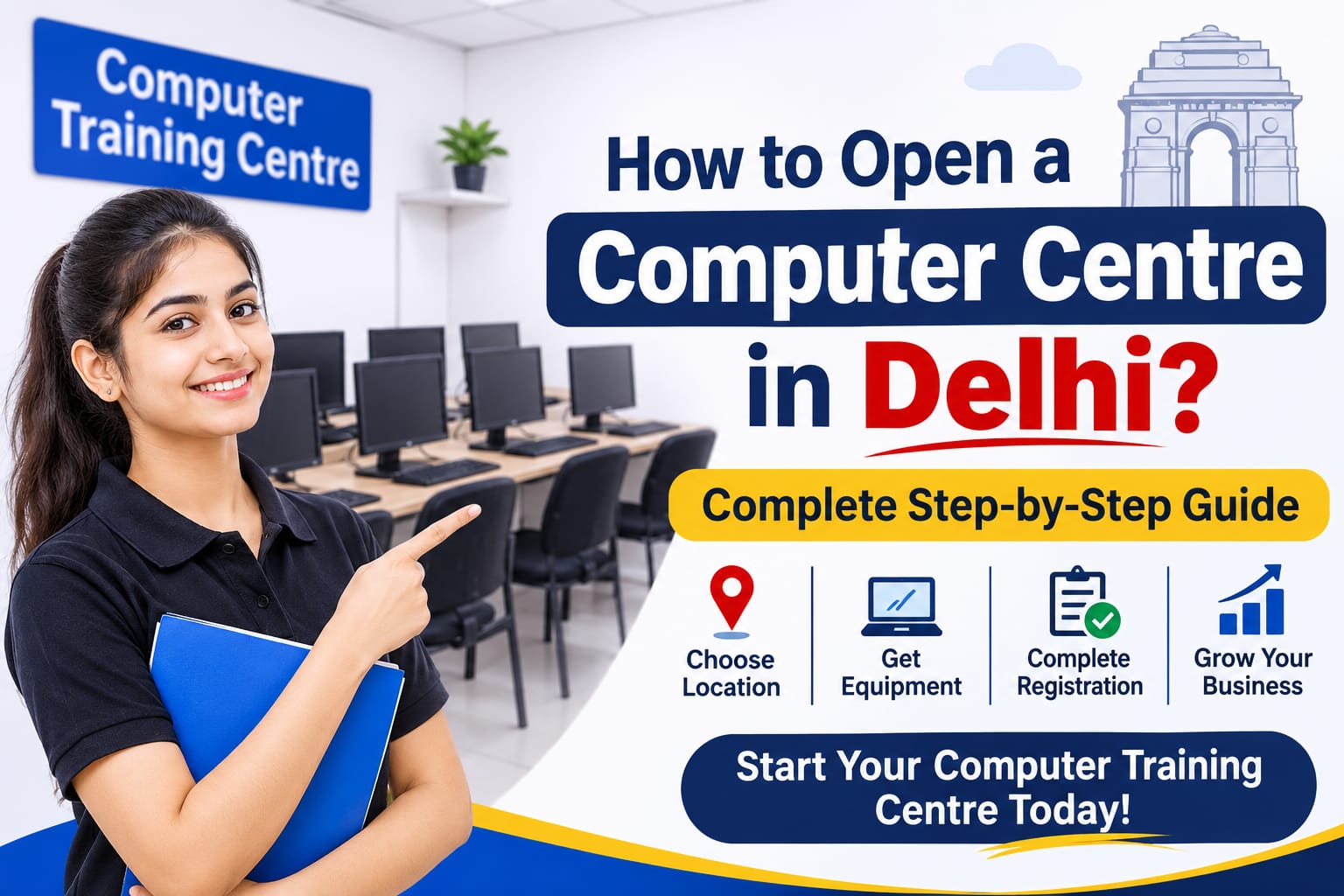
how-to-open-a-computer-center-in-Delhi
Posted on Nov 13-2026
How to Open a Computer Training Centre in Delhi
Are you planning to start your own computer training centre in Delhi? Opening a computer institute can be a great business opportunity for people who want to work in the education and skill development sector.
With the increasing demand for computer education, digital skills and job-oriented training, students are looking for affordable computer courses to improve their career opportunities.
In this guide, we will explain how to open a computer training centre in Delhi, what equipment you need, which courses you can offer and how to attract students.
1. Choose a Suitable Location
The first step is to select a good location for your computer training centre.
Consider opening your institute in an area where students, job seekers and working professionals can easily reach.
Ideal locations include:
- Near schools and colleges.
- Residential areas.
- Local markets.
- Areas with good public transport.
- Places with limited computer training facilities.
Choose a location with sufficient space for computers, students and practical classes.
2. Arrange the Necessary Equipment
A computer training centre does not require a very large investment to get started.
You can begin with a small computer lab and gradually expand your facilities.
Basic requirements:
- Desktop computers or laptops.
- Internet connection.
- Tables and chairs.
- Printer and scanner.
- Whiteboard.
- UPS or power backup.
- Proper lighting and ventilation.
- Licensed software and learning materials.
3. Select the Right Computer Courses
Offering different courses helps you attract students from different educational backgrounds.
Some popular courses you can introduce are:
Basic Computer Courses
- Computer Fundamentals
- Basic Computer Course
- MS Office
- Microsoft Excel
- Advanced Excel
- Internet and Email
Professional Computer Courses
- ADCA
- DCA
- Tally with GST
- Data Entry
- Desktop Publishing (DTP)
- Web Designing
- Graphic Designing
- Digital Marketing
Programming Courses
- C Programming
- C++ Programming
- Python
- Java
- PHP
Technical Courses
- Hardware and Networking
- Cyber Security
- Computer Maintenance
Choose courses according to local student demand and your trainers' expertise.
4. Hire Qualified Computer Teachers
A good teacher is one of the most important parts of a successful computer institute.
Appoint trainers who have practical computer knowledge and can explain concepts in simple language.
Focus on:
- Practical computer training.
- Regular student assessments.
- Attendance management.
- Doubt-clearing sessions.
- Course completion assessments.
5. Prepare Course Fees and Admission Plans
Decide your course fees according to the course duration, facilities, local competition and student affordability.
Offer flexible admission options, monthly batches and short-term courses.
Provide students with:
- Admission forms.
- Fee receipts.
- Student ID cards.
- Study materials.
- Practical assignments.
- Course completion documents, where legitimately authorised.
Maintain proper student records and fee details.
6. Promote Your Computer Training Centre
Marketing plays an important role in bringing admissions to your institute.
Use both online and offline promotional methods.
Effective marketing ideas:
- Create a Google Business Profile.
- Promote courses on WhatsApp.
- Share admission posters on Facebook and Instagram.
- Distribute pamphlets in nearby areas.
- Organise free demo classes.
- Contact nearby schools and colleges.
- Offer introductory discounts.
- Encourage students to refer their friends.
7. Start Your Computer Centre with a Franchise (web hub education)
If you are new to the education sector, starting independently may involve additional planning and administrative work.
You can also explore joining an established education and skill development organisation through a franchise or authorised study centre arrangement.
A suitable franchise partner may provide:
- Course guidance.
- Student admission support.
- Study materials.
- Centre registration assistance.
- Online centre portal facilities.
- Examination and certification support, as authorised.
- Promotional guidance.
Before joining any organisation, verify its registration, credentials, course authorisation, fee structure and written franchise terms.
8. How Much Investment Is Required?
The investment depends on the location, number of computers, furniture and other facilities.
A small computer training centre can start with a limited setup if you already have some equipment.
Your major expenses may include:
- Rent and security deposit.
- Computers and accessories.
- Furniture.
- Internet connection.
- Marketing and advertising.
- Staff salaries.
- Electricity and maintenance.
Prepare a budget before starting and avoid unnecessary expenses in the beginning.
9. Build a Successful Computer Training Business
Opening a computer centre is only the first step. Your long-term success depends on the quality of education and student satisfaction.
Focus on practical learning, affordable fees, regular batches and good student support.
A well-managed computer training centre can gradually build its reputation and attract more admissions through student referrals and local marketing.
Conclusion
Starting a computer training centre in Delhi can be a promising opportunity for aspiring entrepreneurs and education professionals.
With the right location, proper planning, useful courses and effective marketing, you can build a computer education business that supports students in developing valuable digital skills.
Take the First Step Towards Your Computer Training Centre Today!
Explore computer education and centre opportunities with Web Hub IT & Skill Development Foundation.
Website: https://web-hubeducation.org/
Contact: 7678608424
Note: Registration and licensing requirements may vary depending on the business structure, location and nature of activities. Verify applicable requirements with the relevant authorities before starting operations.